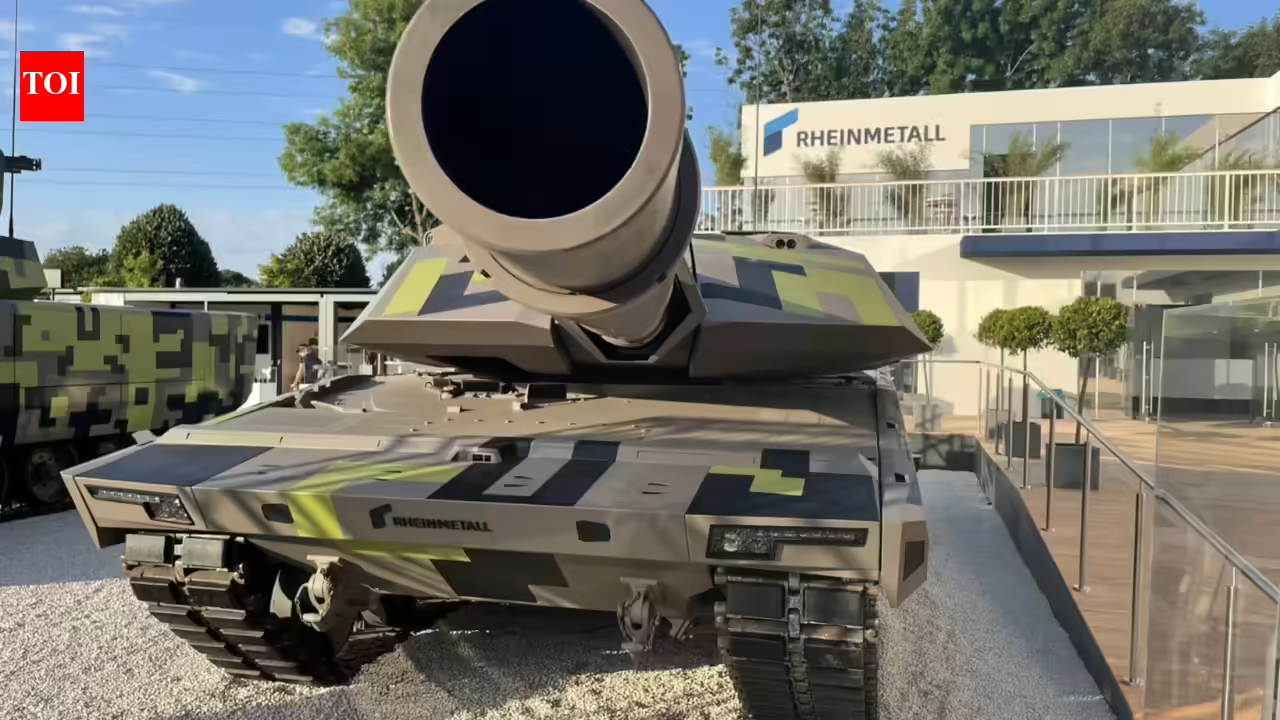
India is preparing for a generational leap in armoured warfare with its Future Ready Combat Vehicle (FRCV) program, intended to replace the ageing T‑72 fleet. The vision is not just a new tank but a multiple‑weapon platform designed for highly network‑centric operations along the northern and western borders. The parameters outlined show India’s ambition to integrate cutting‑edge technologies. Human‑machine teaming is central, with the tank envisioned as a digitised hub capable of controlling unmanned ground vehicles, drones, and loitering munitions. Integrated intelligence, surveillance and reconnaissance (ISR) systems will allow real‑time battlefield awareness, while net‑centric warfare features such as Battlefield Management Systems (BMS) and Identification Friend or Foe (IFF) will ensure collaborative operations across domains, as per a capability roadmap document.India also wants beyond‑line‑of‑sight strike capability, enabling tanks to launch loitering munitions in coordination with surveillance drones. A 360‑degree panoramic vision system will provide stitched day/night imagery to the crew, feeding into the C4I network. Cyber and electronic warfare resilience is another priority, with hardened communications and counter‑jamming abilities to survive in contested environments. Hybrid navigation systems compatible with Indian Regional Navigation Satellite System (IRNSS) and inertial guidance will ensure reliable movement even under GPS denial. In short, India’s FRCV is conceived as a networked combat node rather than a standalone vehicle, as per the same document.Meanwhile, Europe is pursuing similar ambitions. The Leopard 3 project, a successor to the Leopard 2, is expected to integrate modular armour, advanced sensors, and unmanned teaming. Germany’s Rheinmetall has already showcased the KF‑51 Panther, a prototype featuring a 130 mm gun, drone launchers, and AI‑enabled fire control. France and Germany’s KNDS consortium has unveiled the Capint tank, built on the Leopard 2 hull but fitted with a French unmanned turret and designed as an interim solution until the Main Ground Combat System (MGCS) arrives in the 2040s. Capint emphasizes AI integration, counter‑drone measures, and beyond‑line‑of‑sight strike, similar to India’s own requirements.The age of drones is reshaping, globally, how tanks will be utilised in combat. These beasts of war will no longer judged solely by armour thickness or gun calibre but by their ability to survive in dense electronic warfare environments, integration with unmanned systems and the ability to deliver precision strikes from beyond line=off sight standoff ranges. Both India and Europe see future of tanks as digital platforms, combining firepower with ISR, cyber resilience and networked warfare capability.