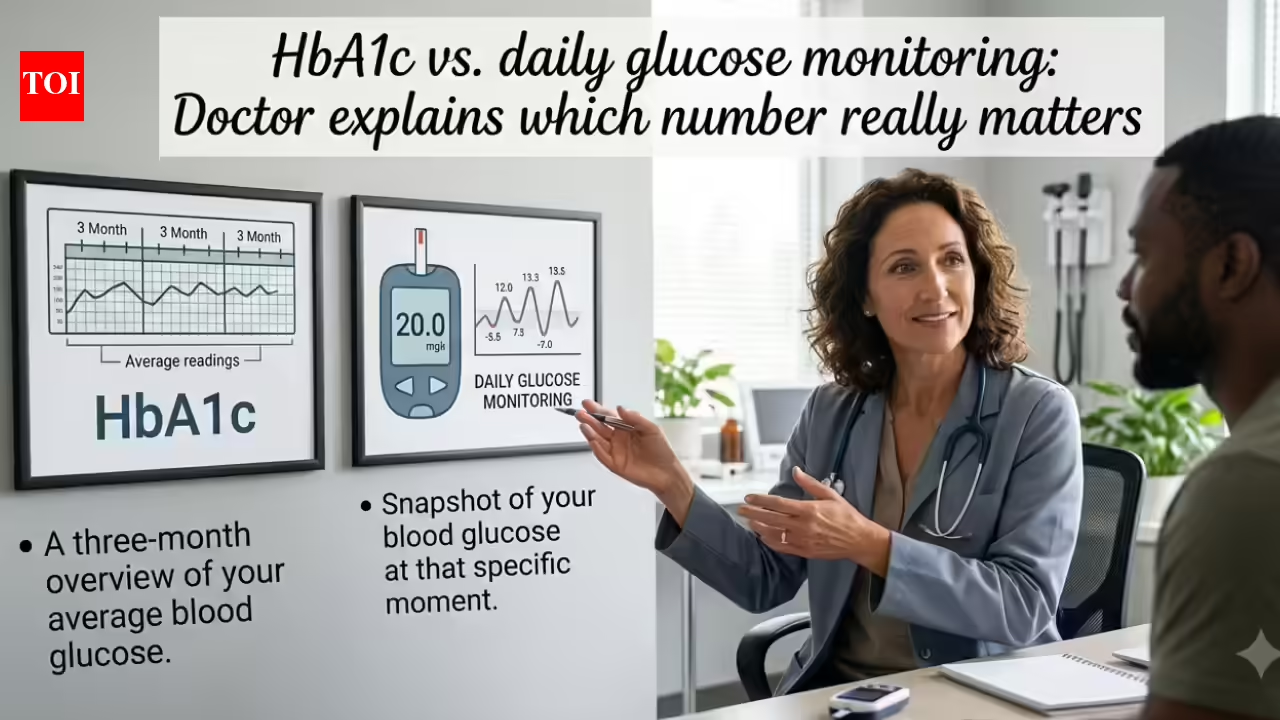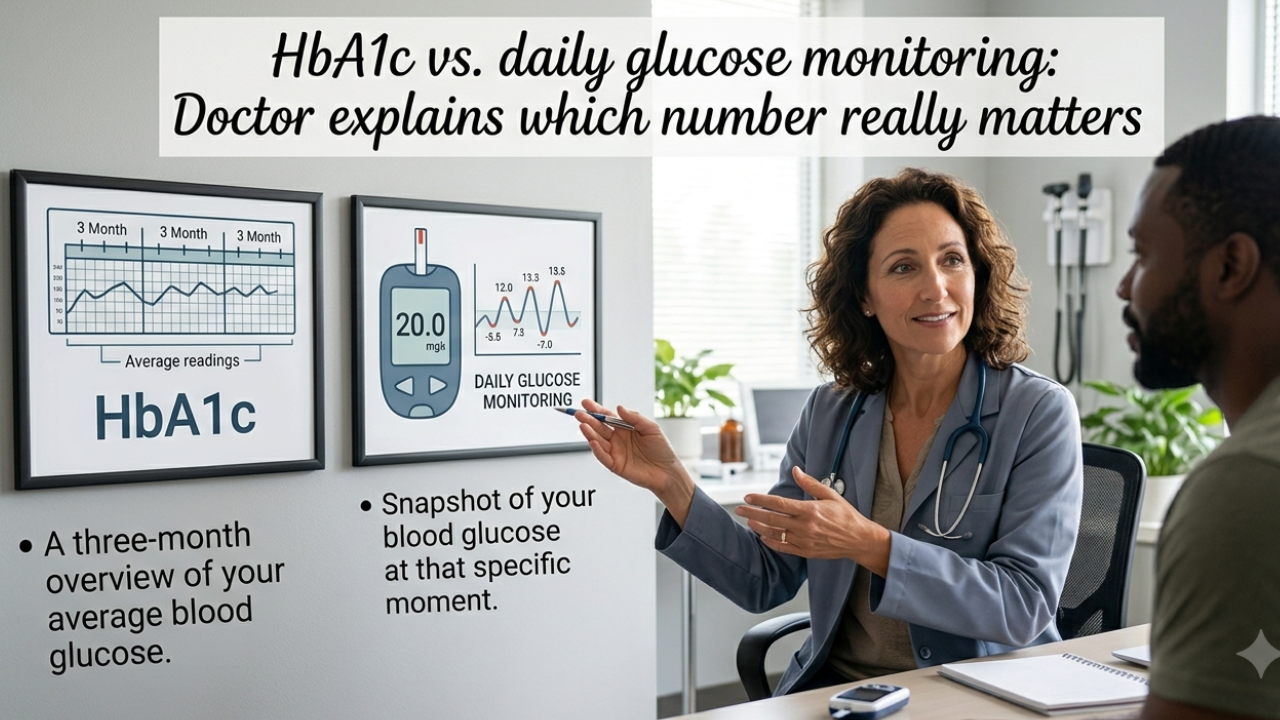
If you have ever checked your blood sugar first thing in the morning, seen a perfectly acceptable number, and thought okay, I’m doing fine. Millions of people managing diabetes do exactly this. They track their fasting glucose, feel reassured when it looks normal, and carry on with their day. But here’s what that number isn’t telling you.A single glucose reading captures one moment, one data point, in what is actually a constantly shifting picture. And if you’re only checking a fingerprick before breakfast, maybe once after dinner, you could be missing hours of elevated blood sugar that happen in between. That’s where HbA1c comes in. Unlike a daily glucose reading, which reflects where your blood sugar is right now, HbA1c tells you where it’s been over the past two to three months.But here’s the thing that confuses a lot of patients: a good HbA1c doesn’t necessarily mean everything is fine, and a slightly elevated one doesn’t always tell the whole story either. Two people can share the exact same HbA1c result and have completely different glucose patterns underneath it, one stable, one swinging between highs and lows. We asked Dr. Nandini Shankara Narayana, Consultant in Endocrinology and Andrology at KIMS Hospitals, Bengaluru, to break down what these numbers actually mean and which one deserves more of your attention.Can someone have a “good” daily glucose number but still get a worrying HbA1c result? Why does that happen?Dr. Nandini Shankara Narayana: Many people do not know that this may occur frequently. Some daily glucose values only provide a snapshot view of blood glucose at that point in time, while the HbA1c provides an overall average for the previous two to three months. Someone may have a normal fasting blood sugar level or an acceptable level on a random glucose check but also could be having multiple elevated blood sugars after meals or at other times of the day. These fluctuations could easily be missed when testing only occasionally with a fingerpick glucose monitoring method. HbA1C values can be affected by disorders involving red blood cells, kidney dysfunction, missing diabetes medications, inconsistent diet or exercise, intercurrent illness etc . For this reason, both an individual’s daily glucose readings and their HbA1c should be considered in conjunction along with other relevant medical history to obtain a full picture of their diabetes control over time.For someone managing diabetes day to day, which number should they actually be paying more attention to, and why?Dr. Nandini Shankara Narayana: To make the best decisions for managing your diabetes, it is important to monitor multiple aspects of your diabetes. Daily blood glucose readings and laboratory tests like HbA1c are two of the most critical aspects that you should be paying attention to. Daily blood glucose readings provide valuable information about your glucose response to meals, physical activity, medication, and/or insulin dose but HbA1c levels make up part of the picture of how controlled your blood glucose levels have been over time (typically over the past 3 months). HbA1C over a period of time also reflects as to how many long-term complications one may have such as kidney disease, nerve problems, eye problems and cardiovascular disease resulting from poor control of diabetes. Patients should use their daily blood glucose readings to make daily decisions on how to manage their diabetes and work toward their HbA1c goal, as per their doctor, which for most people should be under 7%, but may vary depending on the individual.With glucose monitors and CGMs becoming more common, do you think people are starting to rely too much on daily numbers and ignoring the bigger picture?Dr. Nandini Shankara Narayana: CGMs have changed the way patients with diabetes get treated because they give patients access to real-time information and allow patients to see how their nutrition, physical activity, stress levels, and medications have affected their glucose levels. Some patients on CGM may overtly be fixated on a single reading or a spike/dip in their readings. The most accurate way to determine a patient’s glucose control is not to look at any single high or low reading but rather by assessing their overall glucose pattern. By looking at TIR (Time in Range), glucose variability, and HbA1c, it gives a much more comprehensive view of how well a patient’s glucose is managed. The aim of using CGMs is not to maintain perfect glucose control minute by minute, but rather to provide a good control over a longer period of time while also avoiding periods of hypoglycaemia or prolonged hyperglycaemia.What’s one common misconception patients have about HbA1c that you wish more people understood?Dr. Nandini Shankara Narayana: One of the greatest misconceptions of a person with diabetes about their HbA1c level is that having a good HbA1c means that their diabetes is perfectly controlled under all situations. However, the HbA1c level is only an average. Two individuals with exactly the same HbA1c score may have two completely different glucose patterns. For example, one person may have stable glucose levels throughout the day while the other may have frequent high and lows but they will still average out to the exact same A1c score. These fluctuations in blood glucose level could still result in diminished quality of life and increase their risk of serious health complications. Your A1c result is one very important tool to monitor how well you are managing your diabetes. It is best to use the HbA1c result as one of your tools to evaluate your overall diabetes management, in conjunction with your daily glucose results, continuous glucose monitor data, regular doctor visits and healthy lifestyle choices. Effective diabetes management requires a holistic view of your health rather than an isolated focus on one reading.Medical experts consulted This article includes expert inputs shared with TOI Health by: Dr. Nandini Shankara Narayana, Consultant in Endocrinology and Andrology at KIMS Hospitals, BengaluruInputs were used to discuss how daily glucose monitoring and Hba1c help in diabetes management and what is a reliable strategy for this.