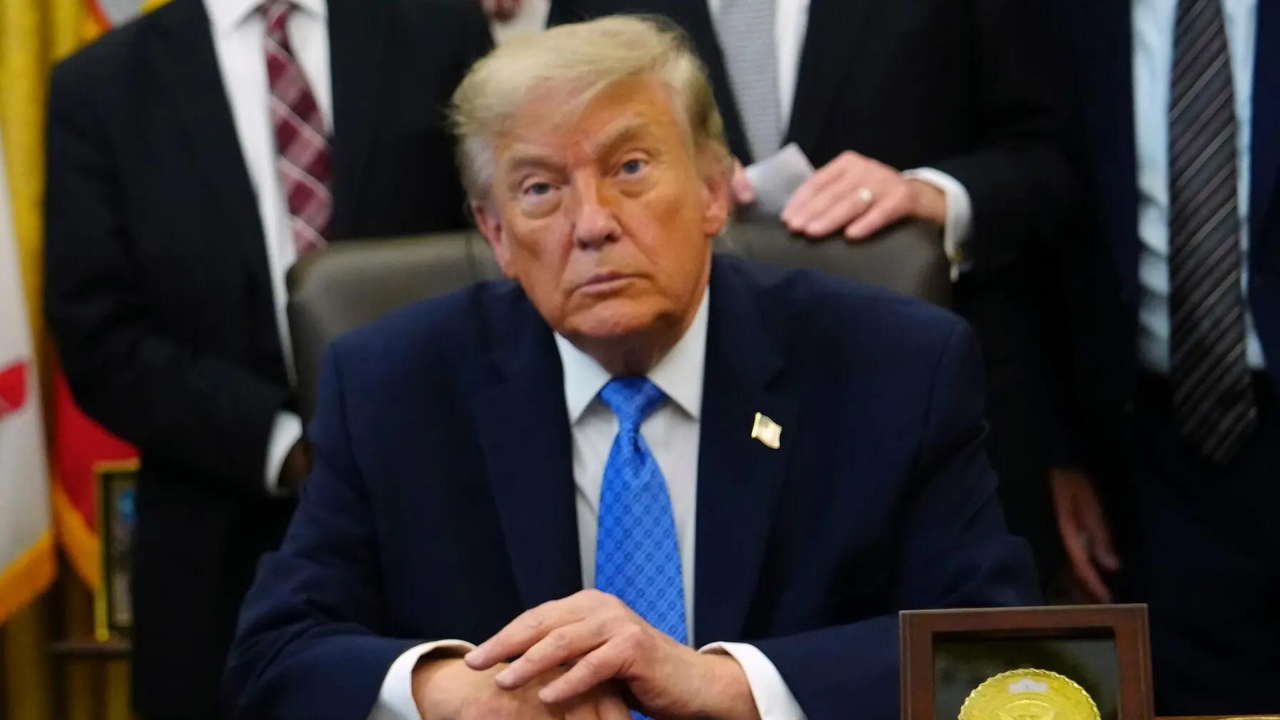
The proposal comes at a time when Europe is reassessing its strategic dependence on Washington. Donald Trump’s repeated criticism of NATO allies, alongside growing uncertainty over future US commitments to European security. Canada is seeking to unveil a new multinational defence lender at next week’s NATO summit in Turkey, in what could become one of the most significant efforts yet to reshape how allied nations fund their security without relying solely on the United States.According to Reuters, Ottawa hopes to announce around 10 founding members for the proposed Defence, Security and Resilience Bank (DSRB), a new institution designed to raise as much as £100 billion ($133 billion) in low-cost financing for defence and resilience projects. The initiative forms part of Canadian Prime Minister Mark Carney’s broader call for an alliance of “middle powers” as the traditional US-led global order comes under increasing strain.The proposal comes at a time when Europe is reassessing its strategic dependence on Washington. Donald Trump’s repeated criticism of NATO allies, alongside growing uncertainty over future US commitments to European security.Canada’s defence bank aims to reshape allied securityReuters reported that Canada’s chief negotiator for the project, Isabelle Hudon, said the government is working towards announcing the founding members during the NATO summit, although final agreements over capital commitments are still being negotiated.”The NATO summit” has become the project’s target deadline, Hudon told Reuters, adding that the initial membership is expected to consist largely of European countries alongside Canada. Membership would remain open to additional nations after launch.The proposed bank would provide affordable financing for defence manufacturing, military infrastructure and resilience projects across allied nations. While South Korea has held what Hudon described as productive discussions over joining, no other G7 country is currently close to signing up. The bank’s long-term credibility will also depend on attracting enough financially strong members to secure a coveted triple-A credit rating. Europe moves closer as doubts over Washington growThe initiative reflects a broader shift underway in Europe as governments increasingly coordinate on defence and foreign policy amid uncertainty surrounding the United States.European leaders, once divided over Italian Prime Minister Giorgia Meloni because of her hard-right political roots, have recently rallied behind her following public attacks from Trump. Analysts say the episodes have encouraged greater unity among European governments that increasingly see collective action as necessary in a world shaped by rivalry between the US, China and Russia.That changing outlook has also spread to several nationalist parties that were once closely aligned with Trump. Figures in France and Germany have criticised his policies on Iran and trade, while concerns over US unpredictability have pushed many governments to place greater emphasis on European strategic autonomy.War and Trump’s NATO criticism sharpen the debateThe renewed focus on European defence comes as Russia continues its war against Ukraine. Hours before the NATO summit, Moscow launched an 11-hour barrage of drones and missiles against Kyiv, killing at least 21 civilians and injuring more than 90, according to Ukrainian officials.Ukraine described it as a “night of horror”, while Russia said the strikes were retaliation for Ukrainian attacks on Russian oil infrastructure. The assault underscored the continuing security challenges facing Europe more than four years after Russia’s full-scale invasion.Against that backdrop, Trump again criticised NATO on Truth Social, arguing that the United States spends disproportionately more on the alliance than its partners. While the figures he cited reflected cumulative US defence spending rather than direct NATO contributions, his pressure over recent years has coincided with a sharp rise in European military spending. All 32 NATO members have now reached or exceeded the alliance’s long-standing target of spending 2% of GDP on defence, while European members and Canada recorded their largest-ever annual increase in military expenditure.Canada’s proposed defence bank now represents the latest sign that allies are preparing for a future in which Europe’s security may rely less on American leadership and increasingly on collective financial and military capacity built within the alliance itself.