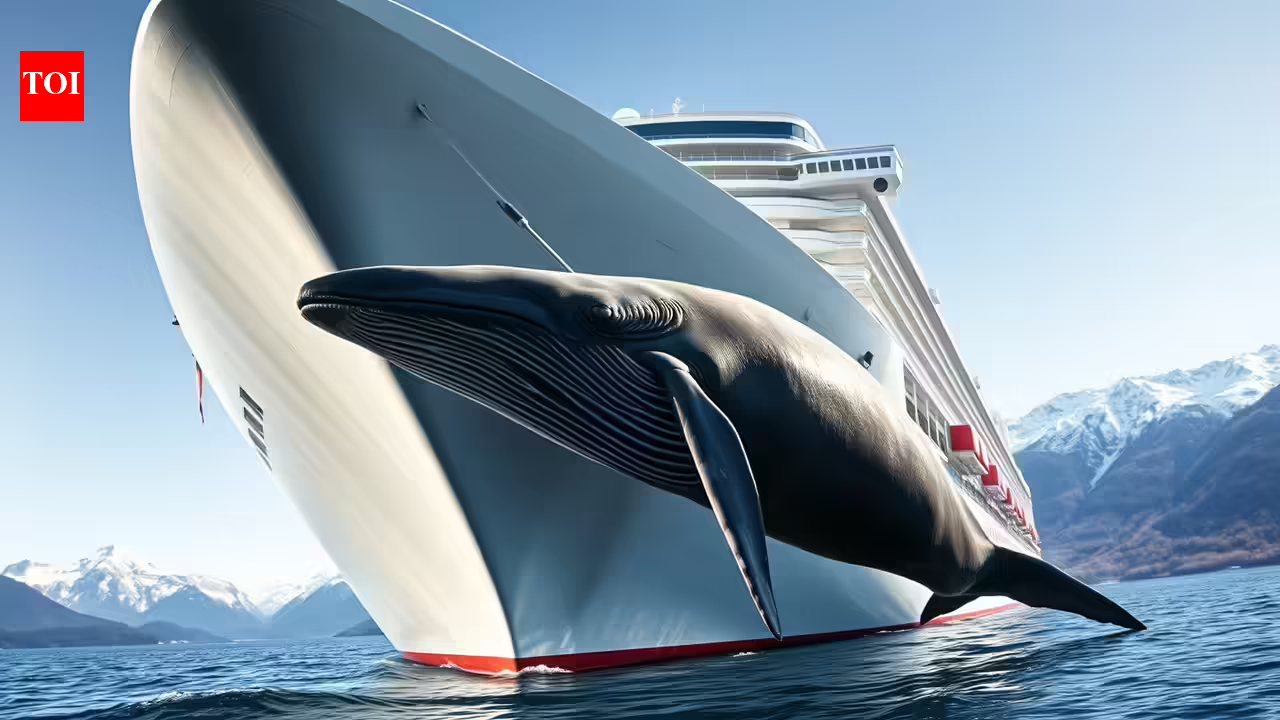
A Royal Caribbean cruise ship sailed into Seward, Alaska, carrying an unexpected and tragic passenger, a dead pregnant fin whale lodged on its bow. The 61-foot endangered whale was discovered when the Ovation of the Seas docked on June 19, ending its seven-day Alaskan cruise from Vancouver. A preliminary necropsy conducted by marine experts revealed blunt force trauma to the whale’s jaw, spine and ribs, injuries consistent with a vessel strike. The incident has triggered a federal investigation and renewed global attention on the growing crisis of whale deaths caused by ship collisions, a danger that experts say claims tens of thousands of whale lives across the world’s oceans every single year.
Royal Caribbean whale death confirmed as likely ship strike
The whale was first spotted draped across the ship’s bulbous bow when it arrived in Seward, a small port town along Resurrection Bay. According to the National Oceanic and Atmospheric Administration Fisheries Alaska, the animal was freshly dead and in good nutritional condition, with healthy blubber and muscle reserves. Biologists from NOAA Fisheries, the Alaska SeaLife Center and Alaska Veterinary Pathology Services carried out the necropsy together over the following weekend. Their preliminary findings showed blunt force trauma to the jaw, spine and ribs, a pattern that strongly points to a collision with a moving vessel rather than natural causes. Full confirmation of the cause of death is still pending further laboratory testing, which can take several months to complete, as noted in the official statement from NOAA Fisheries Alaska.
Endangered fin whales and why this death matters
Fin whales are the second largest animals on the planet, smaller only than blue whales, and they remain listed as endangered under the Endangered Species Act and depleted under the Marine Mammal Protection Act. Killing one, even by accident, is illegal under both laws. What makes this case especially painful is that the whale was pregnant at the time of her death, meaning two lives were lost in a single strike. NOAA Fisheries describes ongoing conservation work and recovery planning for the species on its official fin whale resources page, where commercial whaling history, current threats and protection status are documented in detail.
How cruise ship speed limits prevents future whale strikes
Vessel speed is widely considered the single biggest factor determining whether a whale survives a near collision. Royal Caribbean’s cruise ships typically travel between 18 and 20 knots depending on the route, far above the 10 knot threshold that researchers consider safest for whale heavy waters. Following the incident, the Center for Biological Diversity sent a formal letter urging Royal Caribbean to voluntarily slow its ships to 10 knots or less while passing through important whale habitat. The organisation has separately pursued legal action against the United States Coast Guard over the lack of mandatory vessel speed rules in shipping lanes frequented by whales.
NOAA’s Marine Mammal Stranding Network response in Alaska
This is not an isolated event for the region. A decade earlier, a Holland America ship also arrived in Seward with a dead fin whale on its bow, and in November 2024 a fin whale washed ashore near Anchorage’s busy Coastal Trail. NOAA Fisheries maintains a dedicated stranding response system for such cases, detailed on the Alaska Marine Mammal Stranding Network page, which coordinates necropsies, sample collection and public reporting whenever a marine mammal is found in distress or deceased along Alaska’s coastline. Officials say timely reporting from the public significantly improves the quality of data collected during these investigations.
Royal Caribbean’s statement on the whale incident
A spokesperson for Royal Caribbean Group expressed sorrow over the event, stating that the company takes any impact on marine life with the utmost seriousness and is cooperating fully with NOAA throughout its investigation. The cruise line said it would work closely with federal officials once final findings are released. No penalties or formal consequences have been announced so far, as the case remains under active federal review.
The global whale strike crisis beyond this single case
Conservation experts say the Seward case, however graphic, reflects a far larger and largely invisible problem. Vessel strikes are believed to kill thousands of whales annually across busy shipping corridors worldwide, and many of these deaths go completely unreported because the carcasses sink or drift away unnoticed. Researchers are now testing acoustic sensors and real-time tracking systems designed to alert ship crews when whales are nearby, though such technology remains limited and is not yet widely deployed across commercial fleets.
What happens next in the federal investigation
Investigators continue to examine whether speed, route or crew awareness played any role in the June 19 collision. Final necropsy results, along with any regulatory action, are expected only after extensive laboratory analysis is completed. For now, conservationists continue to push both Royal Caribbean and federal regulators to adopt mandatory, rather than voluntary, vessel speed limits in known whale migration zones, arguing that simple speed reductions remain the most proven way to prevent these collisions before they happen again.