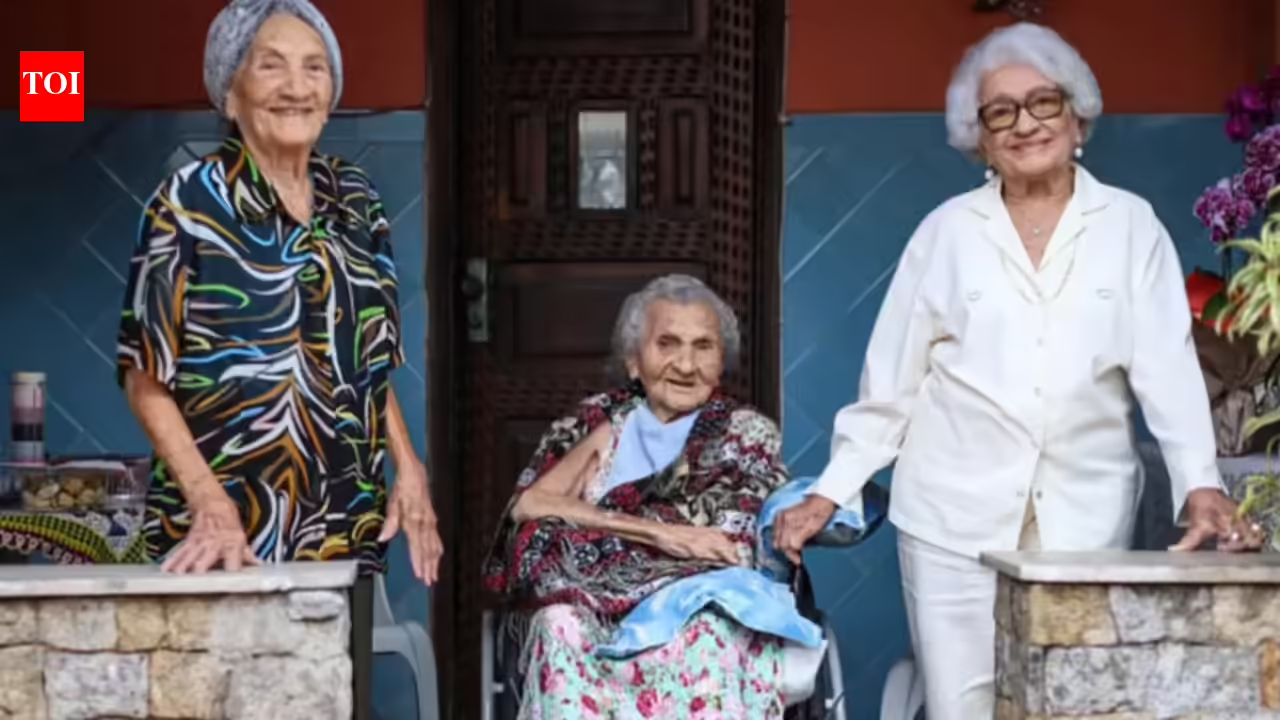
Everyone these days wants to know how to live past 100, right?Scientists have been obsessed with this question for years, wondering if the secret’s tucked away in our DNA, shaped by our habits, or maybe tangled deep in family bonds.Turns out, in Brazil, three sisters might shed some light on this age-old mystery.Picture this: three women, all well over 100, still laughing together, swapping stories, and sharing memories that stretch back more than a century. Their combined age tops 316 years, enough to get them a spot in the Guinness World Records as the world’s oldest living trio of siblings.Now, Levita de Deus Nunes (109), Zoraide de Deus Mota (104), and Zulina de Deus Nunes (103) have taken the top spot not only in the record books but also at the heart of a new scientific study on what keeps people alive and thriving so long.
Studying the world’s oldest trio of sisters
Researchers at the University of São Paulo, led by geneticist Dr. Mayana Zatz, have set out to discover if the secret is hiding in the sisters’ genes. The DNA Longevo Project, which they are a part of, is digging through the genetic code of these extraordinary women, hoping to single out the factors that keep some people spry and sharp for so many years, dodging the usual illnesses and decline most people face as they age.The science is fascinating, but it’s not just about looking for a “longevity gene.” The three sisters come from a family where hitting 100 doesn’t seem to be a fluke, something researchers say is gold for this kind of study. If all three siblings live this long, odds are their genes play a big part. By collecting DNA from families like this, researchers hope to spot protective genes that keep age-related diseases and forgetfulness at bay.Dr. Zatz, who coordinates the University of São Paulo’s Human Genome Research Center, explains it like this: “Through DNA testing, we look for protective genes, and we know there are several of them,” adding, “The more people we have who live past 100, especially families with multiple centenarians, the more accurate our research will be inidentifying them.”While the environment obviously matters, the scientists are betting that the answer has deeper roots in who you are, not just how you live.But these sisters didn’t grow up pampered or with any fancy health routines. In fact, their early years sound almost like something out of a different era: rural life, food straight from the land, days spent outside, no fridge in sight. Zulina remembers swimming and fishing, eating only what they could catch or pick.In her words, “Everything was fresh. We didn’t have a refrigerator.”Their lives were simple. There were no processed snacks, no gadgets, just close family ties and hard, honest work.And as Zoraide added, “Breastfeeding is incredibly important.”And if you ask the sisters where their longevity comes from, they aren’t so sure it’s all about DNA. They’ll tell you it’s about eating real food, staying active, and keeping family ties close.Zoraide raised five kids after working as a nurse. Zulina, on the other hand, was a homemaker, raising six kids. Levita, the oldest, spent years as a craftswoman and later worked for a TV network: “I had a good childhood and adolescence. I can’t complain.”
What do the scientists think?
For the scientists studying them, that’s the big question: Are they healthy and sharp because of biology, or because of how they lived?By comparing healthy centenarians to people their age who struggle with health issues, doctors hope to spot patterns in their genes that help hold off disease and mental decline.And for that, Brazil is a pretty good place to look. With its diverse mix of genetic backgrounds, earlier studies have found rare genetic traits linked to healthy old age — things like strong immune systems that just naturally seem more resilient.However, no one’s pretending genetics tells the whole story.Ben Meyers from LongeviQuest, the group that verified the sisters’ record, says strong family support and community matter a lot, too. Being surrounded by people you love, staying connected, not letting go of those old bonds — those things are just as vital as good genes.Per Meyers, the CEO of LongeviQuest, “When sisters reach that age, there is clearly a strong genetic component.” He added, “But because they live near each other, they also have a support network, with family able to help when needed. There is definitely a community aspect as well.”
What’s next?
Dr. Zatz and her team plan to study about 500 centenarians in total, building what could become one of the world’s biggest databases on healthy aging. If their research pans out, it could give doctors new tools to help people stay vital and independent as they get older.But for now, Levita, Zoraide, and Zulina are living proof that longevity isn’t just about counting the years. After surviving world wars, seeing every technological revolution, and raising whole new generations, they still have something to teach us.Maybe the answer is hiding in their DNA, after all.And maybe it’s just as much in the lifelong bond they’ve shared.