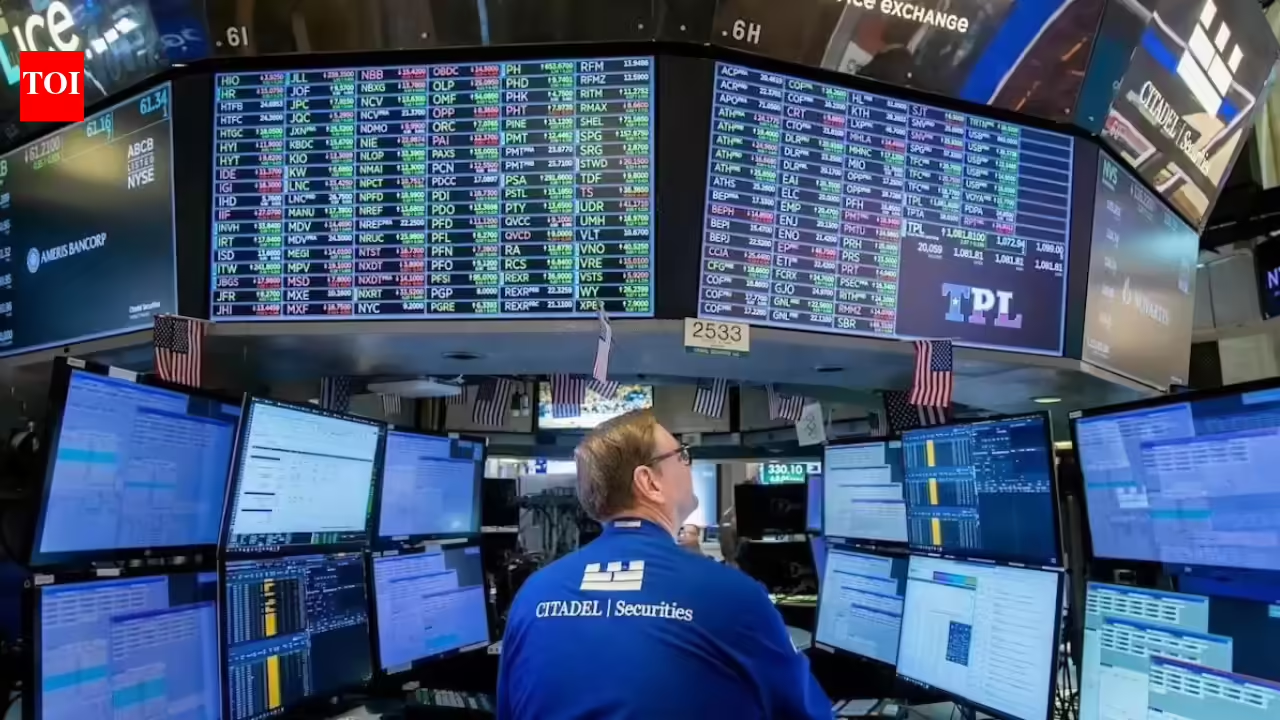
India’s largest discount brokerages, including Groww, Zerodha, Angel One, Upstox and Dhan, are gearing up to offer overseas investing through GIFT City, a move that could make it easier for Indian investors to buy global stocks such as Apple, Nvidia, Tesla and SpaceX.While platforms such as Vested Finance, Borderless and INDmoney already offer overseas investing, the entry of the country’s biggest brokerages is expected to widen access to international markets.
Why are brokerages registering in GIFT City?
GIFT City serves as the gateway for Indian investors to access overseas stocks. With interest in global investing rising, leading brokerages are establishing operations there to offer international investing to their customers.Some brokerages are expected to provide the service directly, while others will partner with a Global Access Provider (GAP), a GIFT City-registered entity that facilitates access to foreign markets.
When can investors start?
Most brokerages are at different stages of launching the service.Once available, investors can open an overseas investment account through their broker’s app or website by completing the online KYC process.Funds can then be transferred from an Indian bank account under the Reserve Bank of India’s Liberalised Remittance Scheme (LRS), which allows resident Indians to remit up to $250,000 per financial year for permitted purposes, including overseas investments.Banks will also levy foreign exchange conversion charges before investors can begin buying overseas stocks.
Who can invest and what is the minimum amount?
The facility will be available to all Indian residents meeting KYC requirements. NRIs can also invest through GIFT City.There is no high minimum investment requirement.Thanks to fractional investing, investors can start with as little as $1, instead of buying an entire share that may cost hundreds of dollars, according to Dhan. The availability of fractional investing may differ across platforms.What are the charges?Brokerages or Global Access Providers generally charge a brokerage fee of around 25 basis points, according to Yogesh Darji, Managing Director, HDFC Securities IFSC.Investors will also incur foreign exchange conversion charges levied by banks, typically ranging between 1% and 1.5% per transaction.
How is GIFT City different?
The key difference is regulation.Companies offering overseas investing through GIFT City are regulated by the GIFT City framework and must comply with its rules. Some existing domestic platforms, by contrast, operate through entities regulated in overseas jurisdictions.
Do investors own the shares?
Yes. Investors remain the beneficial owners of the shares they purchase and are entitled to dividends and other shareholder benefits.The shares are generally held in custody by the broker or investment platform on the investor’s behalf.
How are overseas investments taxed?
According to Nehal Sampat, Partner at Price Waterhouse & Co., the tax treatment depends on whether the investor is a resident Indian or an NRI.Investments made under the RBI’s Liberalised Remittance Scheme (LRS) are subject to 20% Tax Collected at Source (TCS).However, trades executed on GIFT City exchanges do not attract Securities Transaction Tax (STT).